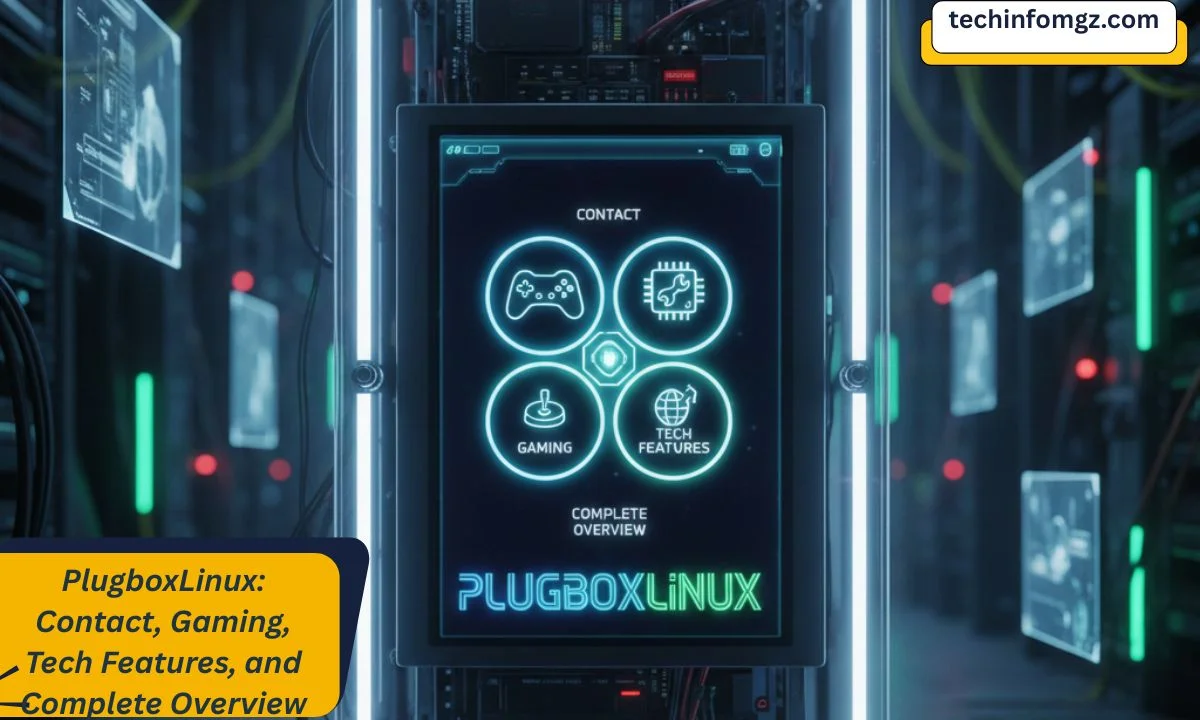
PlugboxLinux was a lightweight, ARM-optimised Linux distribution known for its minimal setup, fast performance, and high customizability. Even though the original project has been replaced by Arch Linux ARM, users still search for PlugboxLinux contact, support, gaming options, and technical features due to its clean structure and flexibility.
Today, it remains popular among ARM developers, retro gaming fans, and DIY Linux enthusiasts looking for a simple yet powerful operating system. With growing interest in ARM-based devices, PlugboxLinux continues to trend as a preferred minimal Linux OS for gaming, emulation, embedded projects, and performance-focused setups.
Its compatibility with retro game emulators, lightweight Linux apps, and Pacman packages makes it ideal for Raspberry Pi builds and custom ARM hardware. This complete overview explores PlugboxLinux gaming, tech features, support alternatives, and how Arch Linux ARM now carries the legacy forward.
What is PlugboxLinux and what makes it Special?
PlugboxLinux was essentially a stripped-down version of Linux specifically built for ARM architecture. Think of it as the bare-bones approach to operating systems; you get exactly what you need and nothing more.
The distribution targeted single-board computers like Raspberry Pi, BeagleBoard, and similar ARM-powered devices. Unlike bloated operating systems that come packed with software you’ll never use, PlugboxLinux gives you a clean slate. You could then install only the packages and applications that actually mattered for your project.
What really set it apart was the Pacman package manager, borrowed from Arch Linux. This made software installation quick and straightforward, while keeping your system lean and responsive.
Why Did PlugboxLinux Disappear?
The original PlugboxLinux project merged with Arch Linux ARM around 2010-2011. Rather than maintaining two separate distributions with similar goals, the developers consolidated their efforts. Today, Arch Linux ARM carries forward the same philosophy with better support and regular updates.
That said, people still search for PlugboxLinux because it left a lasting impression on the ARM Linux community. The principles it championed, minimal installation, maximum customisation, and performance-first design, continue to influence how developers approach embedded Linux systems.
Gaming on PlugboxLinux: Better Than You’d Think
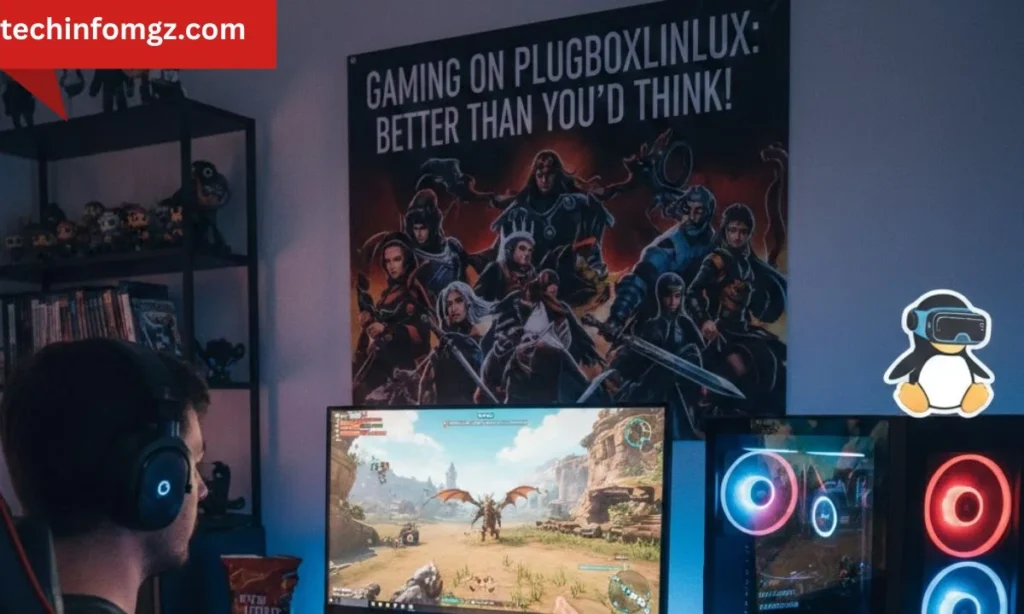
You might wonder how a minimal Linux distribution handles gaming. Surprisingly well, actually. While it wasn’t designed as a gaming OS, its lightweight nature made it perfect for certain types of gaming setups.
Retro Gaming Paradise
Here’s where PlugboxLinux really shone. The system ran classic game emulators exceptionally well thanks to its low overhead. Gamers could enjoy titles from:
- Nintendo Entertainment System and Super Nintendo
- Sega Genesis, Master System, and Game Gear
- Atari 2600 and other vintage consoles
- Game Boy, Game Boy Colour, and Game Boy Advance
- Original PlayStation (on capable hardware)
Popular emulation software like RetroArch worked beautifully on PlugboxLinux. You could set up a complete retro gaming station using just a Raspberry Pi, a microSD card, and some controllers. The minimal system resources meant smooth gameplay without stuttering or lag.
I’ve seen people build incredible arcade cabinets and portable gaming devices using PlugboxLinux as the foundation. The fast boot times meant you could go from power-on to playing Street Fighter II in under 30 seconds.
Don’t Miss :PlugboxLinux Minecraft: Fast, Lightweight Server Hosting
Open Source Gaming Library
Beyond emulation, PlugboxLinux supported numerous open-source games through its package repositories. These weren’t cutting-edge 3D titles, but they offered genuine entertainment:
Strategy & Puzzle Games:
- Battle for Wesnoth (turn-based strategy)
- OpenTTD (transport simulation)
- Frozen Bubble (puzzle game)
Action & Adventure:
- SuperTux and SuperTuxKart (platforming and racing)
- Doom ports like PrBoom and Chocolate Doom
- Cave Story (with proper ARM compilation)
Classic Gaming:
- NetHack (roguelike dungeon crawler)
- Various text adventures and MUDs
These games ran perfectly on ARM hardware because they were designed with efficiency in mind. You didn’t need a powerful GPU or tons of RAM to enjoy hours of gameplay.
Custom Gaming Projects
The DIY community embraced PlugboxLinux for building custom gaming devices. Some popular projects included:
- Handheld gaming consoles similar to the Game Boy
- Bartop arcade machines with authentic controls
- Multi-system emulation boxes
- Portable retro gaming systems with LCD screens
The combination of EmulationStation frontend and PlugboxLinux backend created reliable, professional-looking gaming systems. Many hobbyists preferred this setup over pre-configured distributions because they could control every aspect of performance and appearance.
Technical Features That Developers Appreciated
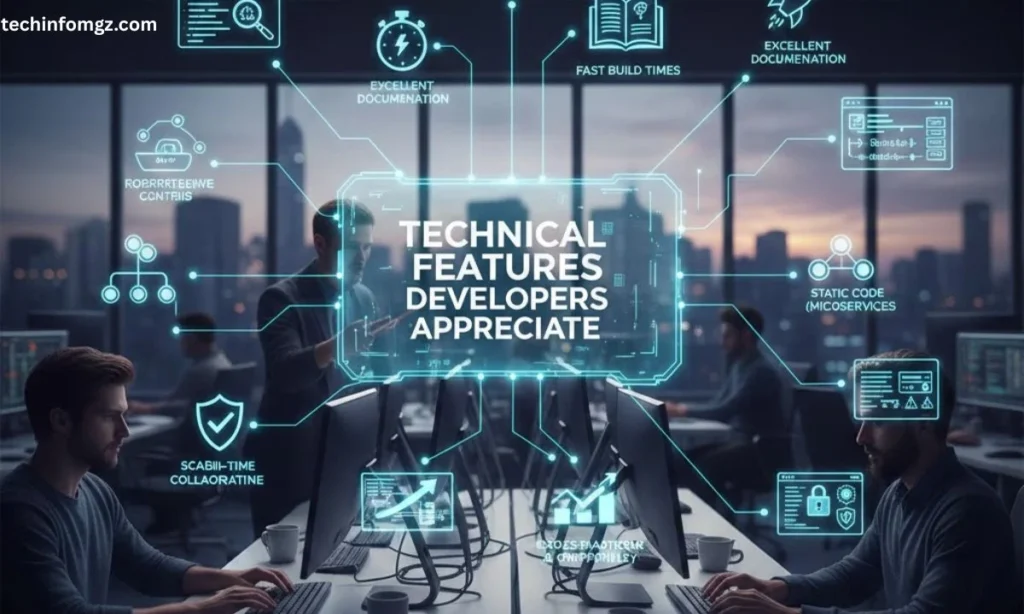
Beyond gaming, PlugboxLinux attracted serious developers and engineers working on embedded systems and IoT projects.
Minimal Installation Philosophy
When you installed PlugboxLinux, you got a command-line interface and little else. No desktop environment, no pre-installed applications, no background services you didn’t ask for. This approach delivered several advantages:
The system booted incredibly fast, often in 10-15 seconds on modest hardware. Memory usage stayed below 50MB at idle. CPU cycles weren’t wasted on unnecessary processes. This made PlugboxLinux ideal for resource-constrained devices and battery-powered projects.
You built your system piece by piece, adding only what your project required. Need a graphical interface? Install a lightweight window manager like Openbox or i3. Want web browsing? Add a minimal browser. This granular control meant every installation was unique and optimised for its specific purpose.
Rolling Release Updates
PlugboxLinux followed Arch Linux’s rolling release model. Instead of major version upgrades every few years, you received continuous updates to packages and the kernel itself.
This meant your system always had the latest security patches and bug fixes. No more waiting for the next distribution release to get important driver updates. The rolling release model particularly benefited ARM hardware, which often needed updated kernel modules for proper functionality.
Regular updates also ensured compatibility with newer ARM processors and peripherals as they hit the market. Developers working on cutting-edge ARM projects appreciated having access to the latest tools and libraries.
Package Management with Pacman
The Pacman package manager made software installation straightforward. Unlike some package managers that feel sluggish on ARM devices, Pacman performed efficiently even on modest hardware.
A simple command like pacman -S retroarch would download and install RetroArch along with all necessary dependencies. Updates worked the same way; one command refreshed your entire system. The AUR (Arch User Repository) provided access to thousands of additional packages that weren’t in the official repositories.
For developers, this meant spending less time managing dependencies and more time actually building things. Package conflicts were rare, and when they occurred, Pacman’s clear error messages helped resolve them quickly.
Complete Customisation Freedom
PlugboxLinux didn’t impose any particular way of working. You could choose your:
- Display server (X11 or Wayland)
- Desktop environment or window manager
- Init system and service manager
- Bootloader configuration
- File system layout
- Network management tools
This flexibility made PlugboxLinux suitable for an enormous range of projects. Some people built home automation controllers. Others created network-attached storage devices. Educational institutions used it for teaching Linux fundamentals because students could see exactly how each component worked.
Advanced Gaming Configurations
For users who wanted to push beyond basic retro gaming, PlugboxLinux offered some interesting possibilities.
Emulation Performance Tuning
The minimal system overhead meant more resources available for emulation. Users could optimise performance by:
- Overclocking ARM processors safely
- Adjusting GPU memory allocation
- Fine-tuning emulator settings
- Using hardware acceleration where available
MAME emulation worked well for arcade classics. PPSSPP could handle PSP games on more powerful ARM boards like the Odroid XU4. Some adventurous users even got limited Nintendo 64 emulation working, though results varied by game and hardware.
GPU Acceleration Support
PlugboxLinux supported OpenGL ES on ARM devices with capable GPUs. This enabled:
- Accelerated video playback
- Better emulation performance for 3D systems
- Simple 3D game development
- Hardware-accelerated desktop compositing
The Raspberry Pi’s VideoCore GPU, Mali GPUs in various ARM boards, and other graphics processors received proper driver support. This made PlugboxLinux viable for projects requiring graphics processing beyond simple 2D rendering.
Game Development Environment
Developers used PlugboxLinux to create and test ARM-native games. The distribution worked well with:
Game Engines:
- SDL2 for 2D graphics and input handling
- Godot Engine (compiled for ARM)
- Love2D for Lua-based game development
- Pygame for Python game projects
Development Tools:
- GCC and Clang compilers optimised for ARM
- Git for version control
- Various debugging and profiling tools
The fast compile times and minimal system interference made iteration quick. Developers could test their games on the actual target hardware without cross-compilation headaches.
Finding PlugboxLinux Support Today
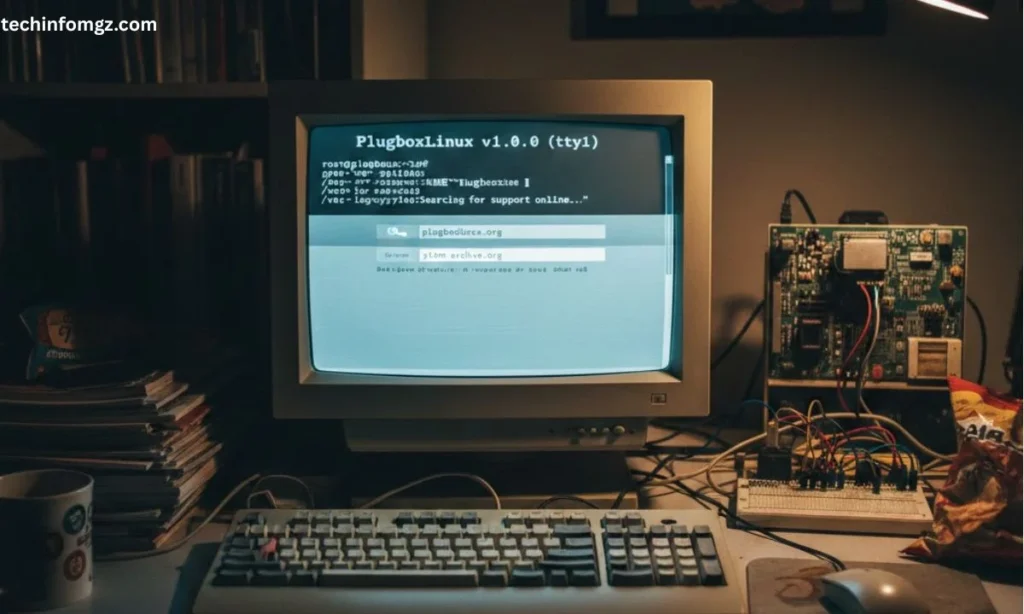
Since the original project merged with Arch Linux ARM, your best resources for support are:
Official Arch Linux ARM Resources
The Arch Linux ARM website provides comprehensive documentation covering installation, configuration, and troubleshooting. Their forums host an active community of users working on similar projects.
You’ll find installation guides for various ARM devices, package information, and detailed wiki articles about common tasks. The community maintains updated documentation for new ARM hardware as it becomes available.
Community Forums and Discussion
Reddit communities like r/archlinux and r/raspberry_pi frequently discuss ARM Linux topics. Stack Exchange and similar Q&A sites contain years of accumulated knowledge about ARM development and embedded Linux.
GitHub repositories often include PlugboxLinux mentions in older issues and documentation. These can provide valuable historical context and solutions to problems that still occur in Arch Linux ARM.
Alternative Distributions
If Arch Linux ARM feels too complex, several alternatives carry forward PlugboxLinux’s lightweight philosophy:
Raspberry Pi OS Lite – Official minimal distribution for Raspberry Pi devices Alpine Linux – Extremely lightweight with security focus Manjaro ARM – More user-friendly Arch-based distribution Armbian – Optimised for various ARM single-board computers DietPi – Ultra-minimal with simple configuration
Each brings its own approach to lightweight ARM Linux, but none quite match the complete control that PlugboxLinux and Arch Linux ARM provide.
Why PlugboxLinux Still Matters
Even though the official project ended over a decade ago, it continues to inspire ARM Linux enthusiasts. Its influence appears in:
- Modern minimal distribution designs
- Raspberry Pi gaming projects
- Embedded Linux development practices
- DIY electronics and maker projects
The lessons learned from PlugboxLinux that simplicity and performance matter more than feature lists continue shaping how developers approach ARM Linux systems today.
Conclusion
They may not be longer active, but their influence remains strong in the ARM Linux world. With its lightweight architecture, rolling release model, and full customisation potential, it allowed users to build everything from retro gaming consoles to minimal development environments. Although the official project has been succeeded by Arch Linux ARM, the essential spirit of PlugboxLinux continues to live through the modern ARM Linux ecosystem.
For users seeking PlugboxLinux contact, support, gaming guides, or technical help, the Arch Linux ARM community is now the primary home. From emulation setups to lightweight computing and DIY projects, PlugboxLinux remains a standout example of what a minimal ARM Linux system can achieve.
FAQs
What is PlugboxLinux?
PlugboxLinux was a lightweight ARM-based Linux distribution designed for minimal setups, embedded systems, and low-power devices. It provided a clean, customizable environment and used the Pacman package manager similar to Arch Linux.
Is PlugboxLinux still available or maintained?
No, this is no longer actively maintained. Its features and community have been succeeded by Arch Linux ARM, which now provides the updated packages and support.
Where can I find PlugboxLinux support or contact information?
Since they discontinued, there is no official contact. Users can rely on Arch Linux ARM forums, mailing lists, and GitHub for troubleshooting, documentation, and technical help.
Can you game on PlugboxLinux?
Yes, PlugboxLinux supported lightweight gaming, especially retro console emulators such as NES, SNES, Sega Genesis, and other classic systems. Its minimal OS design made it good for low-resource gaming setups.
Is PlugboxLinux good for Raspberry Pi or ARM boards?
Yes, PlugboxLinux was widely used on Raspberry Pi, BeagleBoard, and other ARM boards due to its small footprint, fast boot times, and customizable environment.

Welcome to TechInfoMGZ! I’m Dawson, your AI-powered SEO wordsmith, turning humor, creativity, and 3 years of experience as a content writer into digital magic. I craft viral puns and catchy lines that make every post shine.